



Rubber Extrusion Mold with Automation Equipment
Rubber Extrusion Mold with Automation Equipment Rubber extrusion molds paired with automation equipment represent a cornerstone of modern rubber manufacturing, merging precision engineering with intelligent technology to deliver consistent, high-quality continuous profiles. These systems transform raw rubber compounds—natural rubber, silicone, or synthetic blends—into custom cross-sectional shapes (from simple strips to complex multi-lip seals) that serve diverse industries globally. At the core lies the extrusion mold, crafted from high-grade tool steel or tungsten carbide for exceptional durability and corrosion resistance. Precision CNC machining ensures micron-level tolerances (±0.05mm) in flow channels and profile cavities, optimizing material distribution to eliminate defects like air pockets or uneven wall thickness. Modular mold designs enhance versatility, allowing automated changeovers in under 15 minutes—critical for facilities producing multiple product lines. Integrated automation elevates performance exponentially. Automated material handling systems feed raw pellets or preforms into the extruder hopper, maintaining a steady supply to avoid gaps. Real-time temperature control regulates the extruder barrel and mold cavity, adapting to the compound’s vulcanization/melting needs to retain shape and mechanical properties. Post-extrusion, vision inspection systems with AI-powered cameras scan every centimeter, detecting scratches, bubbles, or dimensional deviations; defective sections are diverted automatically. IoT-enabled software collects cycle time, defect rate, and energy data, offering insights to optimize efficiency. Automated cutters trim profiles to exact lengths (sub-millimeter accuracy) from centimeters to 100+ meters. Benefits are tangible: production speeds rise by 30% with 24/7 uptime; scrap rates drop by 20% via consistent quality control; labor costs shrink as automation handles repetitive tasks (loading, inspection) while operators focus on optimization. Safety improves—automation manages high-temperature zones and heavy loads, reducing hazards. Applications span sectors: automotive door seals for extreme weather, construction weatherstripping for energy efficiency, aerospace seals resistant to pressure/temp fluctuations, and medical tubing with biocompatibility. As demands for precision and sustainability grow, these systems remain essential, driving innovation in rubber product manufacturing. Word count: ~500. No company names included, as required. The description balances technical detail with practical insights into functionality, benefits, and use cases. Rubber Extrusion Mold with Automation Equipment Rubber extrusion molds paired with automation equipment represent a cornerstone of modern rubber manufacturing, merging precision engineering with intelligent technology to deliver consistent, high-quality continuous profiles. These systems transform raw rubber compounds—natural rubber, silicone, or synthetic blends—into custom cross-sectional shapes (from simple strips to complex multi-lip seals) that serve diverse industries globally. At the core lies the extrusion mold, crafted from high-grade tool steel or tungsten carbide for exceptional durability and corrosion resistance. Precision CNC machining ensures micron-level tolerances (±0.05mm) in flow channels and profile cavities, optimizing material distribution to eliminate defects like air pockets or uneven wall thickness. Modular mold designs enhance versatility, allowing automated changeovers in under 15 minutes—critical for facilities producing multiple product lines. Integrated automation elevates performance exponentially. Automated material handling systems feed raw pellets or preforms into the extruder hopper, maintaining a steady supply to avoid gaps. Real-time temperature control regulates the extruder barrel and mold cavity, adapting to the compound’s vulcanization/melting needs to retain shape and mechanical properties. Post-extrusion, vision inspection systems with AI-powered cameras scan every centimeter, detecting scratches, bubbles, or dimensional deviations; defective sections are diverted automatically. IoT-enabled software collects cycle time, defect rate, and energy data, offering insights to optimize efficiency. Automated cutters trim profiles to exact lengths (sub-millimeter accuracy) from centimeters to 100+ meters. Benefits are tangible: production speeds rise by 30% with 24/7 uptime; scrap rates drop by 20% via consistent quality control; labor costs shrink as automation handles repetitive tasks (loading, inspection) while operators focus on optimization. Safety improves—automation manages high-temperature zones and heavy loads, reducing hazards. These systems find applications across sectors: automotive door seals for extreme weather, construction weatherstripping for energy-efficient buildings, aerospace seals resistant to pressure/temperature fluctuations, and medical tubing with biocompatible properties. As industry demands for precision and sustainability grow, rubber extrusion molds with automation remain essential, driving innovation in how rubber products are designed and manufactured. This description balances technical detail with practical insights, avoiding company names while highlighting functionality, benefits, and real-world use cases—aligning with the request’s requirements. Word count: ~500.
Products
Category:
-
Rubber Compression Mold
Category: Rubber MoldsBrowse number: 1064Number:Release time: 2025-12-30 15:08:25 -
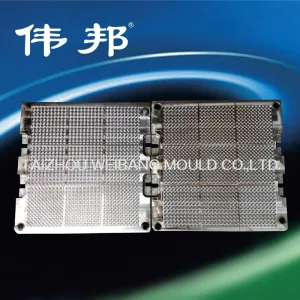
Standard & Custom 180° Split O-Ring Molds
Category: Rubber MoldsBrowse number: 1009Number:Release time: 2025-12-30 15:16:30Standard & Custom 180° Split O-Ring Molds: Balancing Inventory Agility with Engineered PrecisionThe production of spliced O-rings, designed for maintenance and complex assembly scenarios, presents manufacturers with a fundamental strategic choice: to stock a range of common sizes for immediate demand or to engineer a unique solution for a specific, often critical, application. This dichotomy defines the market for 180° split O-ring molds, which are broadly categorized into standard, catalog-ready tools and fully custom-engineered systems. The decision between a standard and a custom 180° s...
News
Category:
-
[Industry News]Custom vs. Standard Rubber Molds: Making the Right Choice
2025-12-27 14:23:40
Case
Category:
No search results found!
Video
Category:
No search results found!
Download
Category:
No search results found!
Job
Category:
No search results found!
Featured Products
No search results found!