

 Español
 Pусский
 한국어
한국어 中文
中文


Rubber Automation Equipment
Rubber Automation Equipment: Enhancing Efficiency and Precision in Manufacturing Rubber automation equipment plays a pivotal role in modern manufacturing, streamlining production processes while improving consistency, quality, and efficiency. These advanced systems are designed to handle various stages of rubber processing, from mixing and molding to curing and finishing, reducing human intervention and minimizing errors. Key Components and Functions 1. Mixing Systems: Automated rubber mixers ensure precise blending of raw materials, including polymers, fillers, and additives. Computer-controlled systems monitor temperature, pressure, and mixing time, guaranteeing uniform compound quality. 2. Molding Machines: Automated injection and compression molding machines produce rubber parts with high accuracy. Robotics assist in loading/unloading molds, reducing cycle times and labor costs. 3. Extrusion Lines: Automated extruders shape rubber into profiles, hoses, or seals with consistent dimensions. Laser measurement systems and feedback loops adjust parameters in real time. 4. Curing Systems: Automated vulcanization ovens and presses optimize curing time and temperature, enhancing product durability. Sensors detect deviations to prevent defects. 5. Post-Processing Equipment: Automated trimming, deburring, and inspection systems ensure finished products meet strict quality standards. Vision systems and AI-powered defect detection enhance reliability. Benefits of Automation in Rubber Manufacturing - Increased Productivity: Continuous operation and faster cycle times boost output. - Improved Quality: Precision control minimizes variations and rejects. - Cost Efficiency: Reduced labor and material waste lower operational expenses. - Safety: Automation limits worker exposure to hazardous environments. - Scalability: Flexible systems adapt to diverse product requirements. Industry Applications Rubber automation equipment serves industries like automotive (seals, gaskets), medical (silicone components), construction (vibration dampers), and consumer goods. As smart manufacturing evolves, integration with IoT and AI further enhances predictive maintenance and process optimization. Conclusion By leveraging automation, rubber manufacturers achieve higher efficiency, superior product consistency, and competitive advantages. The adoption of intelligent systems ensures sustainable growth in an increasingly demanding market.
Products
Category:
Rubber Equipment
-
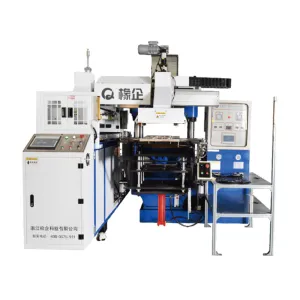
XP (GT300-2S) H Cold Feed Dual-Mold Rubber Automation Equipment
Category: Rubber EquipmentBrowse number: 35Number:Release time: 2025-12-31 10:49:48Equipment Description:1. The equipment is designed to work with three-layer molds, producing two mold cycles per vulcanization cycle. It offers high production efficiency and large single-item output, making it suitable for rubber products with relatively longer vulcanization times.2. Rubber strip raw material is cold-fed into the feeding port. The entire process includes conveying and plasticizing, rubber blank loading, product vulcanization, product demolding, finished product boxing, and mold cleaning. When integrated with a vulcanizing press, it forms a closed-loop process flow, enabling f...
News
Category:
-
[Industry News]Key Components of a Successful Rubber Automation Line
2025-12-27 14:08:59
Case
Category:
No search results found!
Video
Category:

Download
Category:
No search results found!
Job
Category:
No search results found!
Featured Products
No search results found!


